The Grateful Immigrant’s Take: “Forever Wars”? No — Good vs. Evil IS Forever

Many good, hard-working American citizens — veterans, taxpayers, moms and dads who’ve buried sons and daughters, and everyday folks just trying to keep the lights on — are exhausted. They look at our country’s military engagements overseas and say, “Enough. No more forever wars.”

I hear them. I respect their fatigue. They’ve watched trillions of dollars vanish into sand, seen flag-draped coffins come home, and wondered why America keeps bleeding while our own borders stay wide open and our cities crumble. Their frustration is real. Their desire for peace at home is honorable. As a legal immigrant who arrived with nothing in 1987 and swore allegiance to this flag in 1992, I understand the longing for a nation that puts its own people first.

But here’s where we must be honest. The phrase they keep repeating — “forever wars” — deserves a closer look.

What “Forever Wars” Really Means

The term “forever wars” (or “endless wars”) exploded in popularity after 9/11. It describes the long, grinding fights in Afghanistan, Iraq, Syria, Yemen, and beyond — operations that stretched for decades with no clear victory parades, no defined finish lines, and no obvious benefit to the average American family. Critics on both the right and the left use it to argue:

  • These conflicts cost too much in blood and treasure.
  • They create more enemies than they kill.
  • They enrich defense contractors while draining the heartland.
  • America should just come home and stay home.

Presidents from both parties have promised to end them. Candidates still campaign on it. And millions of citizens nod along, tired of what feels like permanent entanglement.

I get the slogan. It’s catchy. It feels like common sense.

But slogans are not truth. And this one misses the deeper reality.

This Grateful Immigrant’s Take — Step by Step

Step 1: Good and Evil do not take vacations. Evil is not a temporary policy problem you can “end” with a tweet or a withdrawal date. Evil is ancient, relentless, and patient. It wears new masks — communism yesterday, theocratic terror today — but its goal never changes: to enslave the free, to crush the grateful, and to replace light with darkness. The moment you pretend evil can be negotiated away or ignored until it “goes away,” you have already lost.

Step 2: America did not choose this fight — Evil chose us. On 9/11, radical Islamists did not attack us because we were in their backyard. They attacked us because we exist as a free, grateful, God-blessed nation. The same is true of Iran’s regime today. They chant “Death to America” not because we occupy them, but because our very existence as a shining city on a hill exposes their tyranny. You don’t end that by leaving the field. You end it by standing firm.

Step 3: “Forever wars” is the wrong diagnosis. The real problem has never been that America stayed too long. The real problem is that America often fought with one hand tied behind its back — nation-building instead of decisive victory, political correctness instead of raw strength, half-measures instead of total commitment. When we fight to win — quickly, prudently, and without apology — the wars are short. When we fight to manage or appease, they become “forever.”

Step 4: Good vs. Evil IS forever. This is the part polite society doesn’t want to say out loud. The battle between Good and Evil did not start in 2001 and will not end tomorrow. It is the permanent condition of a fallen world. From Cain and Abel to the American Revolution to the fight against Iran’s death cult, free men and women have always had to choose: stand and fight with gratitude and spine, or retreat and watch evil grow.

That choice never expires.

Step 5: True allegiance demands permanent, prudent, pragmatic action. This is where my three pillars come in.

  • Accountability: We must hold evil regimes accountable — no more excuses, no more pallets of cash, no more “strategic patience.”
  • Assimilation: America’s enemies must assimilate to civilized norms or be removed. They do not get to import their theocracies or ideologies here.
  • Allegiance: Every grateful citizen — immigrant or native-born — owes permanent loyalty to the country that gave us freedom. That loyalty is not negotiable when evil knocks.

Practiced permanently, prudently, and pragmatically — that is how a grateful nation stays free.

Step 6: Authority is not the issue — Moral clarity is. We can argue semantics about carrying out the battle: timing, resources, strategy, prudence. But make no mistake—we are the good ones. There is no moral equivalence here. Moral equivalence is a tool used to hamper us, to create false symmetry between defenders of liberty and those who sponsor terror, hang dissidents, stone women, fund proxies to murder innocents, and vow our destruction. Equating America’s reluctant but necessary defense with the evil of Iran’s theocracy is not wisdom—it’s surrender disguised as sophistication.

For the crowd quick to cry “Where’s your congressional authority?” or “This violates the Constitution,” let’s set the record straight: The President operates under Article II as Commander-in-Chief, with inherent power to defend the nation and its interests against imminent threats. This authority is as old as the Republic—no full declaration of war required for every defensive or limited action.

The War Powers Resolution of 1973 (passed post-Vietnam to check endless entanglements) requires notification to Congress within 48 hours and a 60-day clock (plus 30-day withdrawal) unless Congress authorizes or declares war. Yet presidents of both parties have relied on Article II for swift, decisive strikes without prior approval—because evil doesn’t wait for hearings.

  • Obama ordered the 2011 Libya intervention without upfront congressional authorization, citing Article II and national interests. He expanded drone strikes across Yemen, Somalia, Pakistan—hundreds without new votes.
  • Recent administrations used Article II (and stretched 2001/2002 AUMFs) for strikes against Iran-backed militias.
  • These aren’t anomalies—they’re precedent. Limited, prudent actions to neutralize threats fulfill the oath to protect and defend.

The selective outrage over “authority” often aims to paralyze our side while excusing inaction. When the President acts to eliminate a regime’s nuclear ambitions or command structure plotting against Americans and allies (as in the recent decisive operations against Iran’s theocracy that eliminated the Supreme Leader), it’s not overreach—it’s duty.

No moral equivalence. We are the good ones. True gratitude means acknowledging our power, right, and duty to act decisively when evil forces our hand.

Final Word from a Grateful Immigrant

So when you hear “forever wars,” remember this: The war against Evil is indeed forever. The only question is whether America will fight it with the same grateful, unapologetic spirit that built this nation—or whether we will tire, retreat, and hand the future to the forces of darkness.

I chose allegiance in 1992. I choose it still. I will never apologize for wanting the Good to win—permanently.

What about you, fellow American?

Are you ready to stop calling it “forever wars”… and start calling it what it really is?

The eternal fight between Good and Evil.

And as long as there is breath in this grateful immigrant’s body, I will stand on the side of Good—with spine, with gratitude, and with total allegiance to the greatest nation on earth.

God bless America. And may He give us the wisdom and courage to finish what Evil started.

MetricScore (0–10)Quick Reason
Accountability8Accepting Responsibility
Assimilation7NA
Allegiance8Protecting Citizens
Permanently8Acted for future security
Prudently8Acted with ALL available info
Pragmatically8Took what was available
Total47/60Verdict: Mixed

Because of President Trumps’ actions on Iran, my scorecard for my country improved from 45 out of 60 to 47/60.

– The Grateful Immigrant from St. Paul, Minnesota

LIVE GRATEFUL 🇺🇸 (It starts in The Spine NOT on your Knees)
Islamophobia! Of course. Let me tell you why.

Hey there, fellow grateful ones — it’s me, your host at The Grateful Immigrant, checking in from the heart of St. Paul, Minnesota. If you’ve been following along, you know my last post, “Ingratitude Unmasked: Why We Let It Happen—and How Gratitude’s Pillars Fix It,” dove deep into that viral reel of an immigrant trashing America while grabbing the goodies. It was a raw look at how entitlement and a “cash cow” mentality erode the very foundation that makes this nation exceptional. But folks, that was just the tip of the iceberg. Today, we’re cranking it up a notch because the mindset I’m talking about doesn’t stop at words — it escalates to something far more dangerous: immigrants with outright malicious intent, often cloaked in religious or ideological garb, exploiting our openness to chip away at our culture from within.

And when anyone dares to call it out? Boomn— “Islamophobia!” That’s the knee-jerk accusation thrown like a shield to shut down the conversation. But let’s get real: this isn’t about fear or hate; it’s about facts, evidence, and preserving the America I pledged my allegiance to back in 1992 after arriving legally in 1987. As a grateful immigrant who’s lived the three pillars —Accountability (pulling my weight without excuses), Assimilation (embracing American norms), and Allegiance (loyalty to this land above all) — I see this as the ultimate betrayal of the reciprocal gratitude that built this country. So, let’s break it down point by point, citing the scholars, journalists, politicians, reformers, and brave ex-Muslims who’ve been sounding the alarm. No sugarcoating; just the raw truth.

Point 1: The “Islamophobia” Label as a Deflection Tactic

They scream “Islamophobia!” to silence scrutiny, but it’s a smokescreen that protects bad actors and stifles honest debate. British journalist and author Douglas Murray nails this in his work, calling out how even the mildest critiques of Islam or its political strains get branded as bigotry. He argues that the term is used to “shutter down” reporting on terror attacks or cultural clashes, preventing us from grasping reality. Murray, in his bestseller The Strange Death of Europe: Immigration, Identity, Islam, warns that this tactic exploits Western guilt and political correctness, allowing supremacist elements to advance unchecked. As he put it bluntly: “The claim that Islam is a religion of peace is a nicety invented by Western politicians so as either not to offend their Muslim populations or simply lie to themselves that everything might yet turn out fine. In fact, since its beginning Islam has been pretty violent.” And here’s another gem from Murray: “When it comes to jihadistic extremism, jihadism comes from Islam.” Spot on—it’s not phobia; it’s prudence.

Dr. Zuhdi Jasser, a reformist Muslim physician and Navy veteran, echoes this from inside the community. As founder of the American Islamic Forum for Democracy, he’s testified before Congress that accusations of “Islamophobia” shield Islamist groups and silence reformers like him who push for separating faith from theocracy. Jasser calls it part of an “honor brigade” that exploits our openness to advance political Islam without accountability. He warns: “Terrorism is a symptom. The disease is the pre-modern interpretation of Islam.” If even a devout Muslim like Jasser gets hit with the label for warning about radicalism, what does that tell you? It’s deflection, pure and simple, turning our free speech against us.

Point 2: Countless Viral Videos and Statements of “Taking Over”—And the Glaring Lack of Pushback

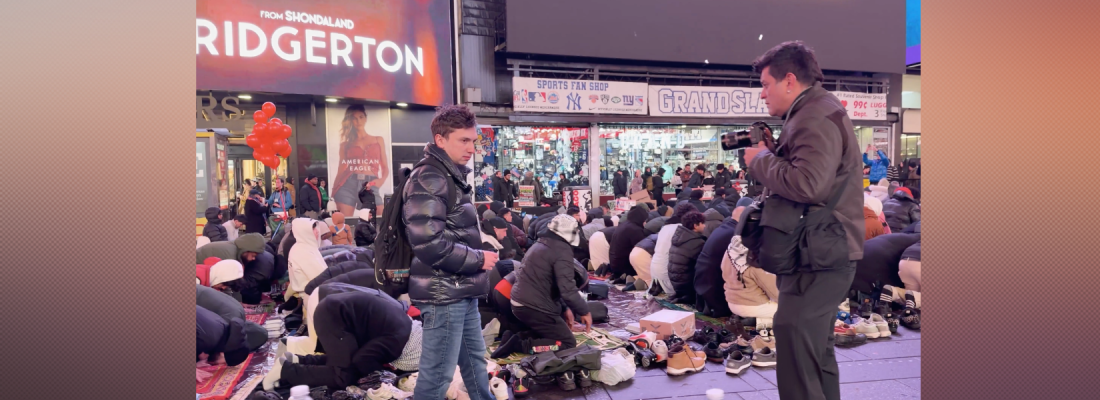
We’re not imagining this—there are viral videos and public statements from some Muslim immigrants or leaders explicitly declaring intentions to “take over” America, cities like New York or Houston, or the West through demographics, numbers, or force. Recent clips (2025–2026) show speakers at large gatherings in Times Square or Brooklyn affirming “We are taking over New York City” amid chants of “Allahu Akbar,” or vowing Sharia replacement in Europe/Germany with threats of attacks on resisters. In Texas and Minnesota, footage highlights rhetoric about America becoming a Muslim state via birth rates or control, often tied to public prayers or processions. These aren’t isolated fringe voices; they go viral repeatedly, fueling fears of conquest rather than integration.

What’s even more telling? The near-total lack of major, prominent denunciations from mainstream Muslim leaders, organizations like CAIR, or everyday community voices. No widespread open letters, press conferences, or fatwas condemning these specific “takeover” claims as un-Islamic or harmful to integration. Instead, when concerns arise, the response is often deflection—framing them as Islamophobic conspiracies that endanger Muslims. This silence (or minimal pushback) amplifies the existential threat: if supremacist rhetoric goes unchallenged internally, it normalizes views that reject assimilation and allegiance. As Brigitte Gabriel warns from her Lebanese experience: “The Muslims bombed us because we are Christians. They want us dead because they hate us.” And Douglas Murray adds that without defense against such imported ideologies, the West risks cultural erosion from within. This isn’t reciprocity—it’s exploitation of our openness while the host culture gets labeled bigoted for noticing.

Point 3: Evidence from Actions in Muslim-Majority Nations—Not Theory, But Reality

Why call it “Islamophobia” when the proof is in the pudding? Look at the track record in nations where Islam dominates: severe restrictions on religious freedom that make assimilation and reciprocity a one-way street. The U.S. Commission on International Religious Freedom (USCIRF) 2025 Annual Report lays it out starkly, recommending 16 countries as “Countries of Particular Concern” for egregious violations—many Muslim-majority like Afghanistan, Iran, Pakistan, Saudi Arabia, Tajikistan, and Turkmenistan. In these places, apostasy (leaving Islam) can mean death in 13 nations, blasphemy laws lead to mob violence or executions (Pakistan hit record highs in 2025), and public Christian worship is banned or heavily restricted in over 20 countries. Churches bombed in Nigeria and Egypt, forced conversions in Pakistan, no public crosses or bells in Saudi Arabia—it’s systemic, not isolated.

Aid to the Church in Need’s 2025 Religious Freedom Report highlights jihadist escalations in Africa and authoritarian theocracies enforcing Sharia over pluralism. We don’t storm into these countries demanding unrestricted Christian street prayers or labeling their restrictions “Christianophobic.” Why? Because we respect their cultural sovereignty. But here in the West, the expectation flips: accommodate large-scale Muslim practices (like street-blocking prayers or amplified adhan) while crying bigotry if anyone questions the fit. That’s not equality; it’s exploitation.

Point 4: Islam’s Incongruence with Western Culture—Raw and Undeniable

Period. Dominant forms of Islam today clash with the West’s foundations: individual liberty, secular governance, gender equality, and a Judeo-Christian heritage that birthed pluralism. Murray warns that mass immigration from Muslim regions imports conflicts and erodes identity, predicting that without defense, Europe (and America) faces a “strange death” from within. He points to rising antisemitism driven by imported populations and the failure to integrate, saying the West is “too weak for radical Islam.” Murray adds: “Rather than being a ‘perversion’ of Islam, it is truer to say that the version of Islam espoused by ISIS, while undoubtedly the worst possible interpretation of Islam, and for Muslims and non-Muslims everywhere obviously the most destructive version of Islam, is nevertheless a plausible interpretation of Islam.”

Jasser, as a Muslim reformer, agrees: Islam needs reform because its current political form (Islamism) doesn’t mesh with democracy. He argues for ideological vetting of immigrants to weed out Sharia supremacists, distinguishing personal faith from totalitarian governance. As Jasser puts it: “You don’t fight [extremism] by dictating, rigging, or manipulating outcomes in the marketplace of ideas. You fight it by promoting, as much as possible, a truly free marketplace of ideas, including religious ideas.” Christianity, as practiced in the West, emphasizes “render unto Caesar” separation—tolerant even in secular times. Islam’s theocratic leanings? Not so much, as evidenced globally.

Ayaan Hirsi Ali, the Somali-born activist, author, and Hoover Institution fellow, brings an unmatched insider perspective as a former Muslim who escaped forced marriage, female genital mutilation, and oppression to fully assimilate into the West (first Netherlands, then America). She warns that radical Islam is a “religion of conquest,” not peace, and that mass immigration from Muslim-majority countries without firm assimilation erodes women’s rights and Western freedoms. In her book Prey: Immigration, Islam, and the Erosion of Women’s Rights, she documents how it has fueled sexual violence crises in Europe due to unintegrated attitudes toward women and “modesty doctrines.” Hirsi Ali calls for pragmatic limits: “It is simply pragmatic to restrict migration, while at the same time encouraging integration.” In 2026 interviews, she argues self-preservation requires “firm limits on Islamic influence” and honest confrontation: “Confronting Islam is NOT racist.” She states bluntly: “Islam is not a religion of peace. Islam is a religion of Conquest.” Her voice proves this isn’t about hate—it’s about defending the values that allowed her (and me) to thrive as grateful immigrants.

Point 5: Assimilation Means ASSIMILATION—Not Just Freedom of Speech and Religion, But to the Undergirding Culture

Assimilation isn’t optional or superficial—it’s an active requirement to align with the host nation’s undergirding culture, not just cherry-pick freedoms like speech or religion while importing clashing norms. We don’t go to Muslim-majority countries and demand they bend to our ways, calling them xenophobic if they don’t. Why? Because we let their cultures be. But here, the reverse happens without reciprocity. Murray highlights this asymmetry, noting that Western tolerance often leads to intolerance when diverse groups don’t adapt: “Londoners say, ‘We’re so proud of our diversity and tolerance,’ but what if that diversity ends up making us intolerant?” Jasser stresses that true reform means separating Islam from politics for compatibility with Western democracy, not demanding accommodations that erode the Judeo-Christian-influenced secular framework. Hirsi Ali echoes this, warning of failed integration leading to parallel societies and cultural erosion. Without this deep alignment, gratitude turns to entitlement, and openness becomes a vulnerability.

Point 6: Limited Immigration Works; Mass Inflows Are Problematic

A small, vetted number of Muslim immigrants can thrive under the pillars—assimilate, contribute, pledge allegiance without demanding overhauls. But large-scale, unchecked migration creates parallel societies, strains resources, and tips the scales toward cultural shifts. Pew data shows higher Sharia support in bigger Muslim enclaves, with lower integration. Murray highlights Europe’s no-go zones and riots as warnings for America. Jasser backs prudent caps and screening for Islamist ties, like Cold War-era checks. Hirsi Ali adds that mass inflows from certain regions skew demographics and attitudes, eroding women’s safety without strong assimilation policies. It’s not exclusion; it’s sustainability—gratitude demands stewardship, not dilution.

Point 7: Warnings from Politicians and the Front Lines

Politicians like Rep. Chip Roy (R-TX) and Rep. Harriet Hageman (R-WY) aren’t mincing words. In the 2026 House hearing “Sharia-Free America: Why Political Islam & Sharia Law are Incompatible with the U.S. Constitution,” Roy shocked with stats on Texas’ 172% Muslim population rise and polls showing Sharia support, warning of the Muslim Brotherhood’s infiltration aims. “They want America to become Islamic!” he declared, pushing bills like the Preserving a Sharia-Free America Act to bar Sharia-adherent entrants. Hageman, alongside Roy, grilled on Brotherhood threats and Sharia’s clash with rights. These aren’t fringe views; they’re calls to protect the Constitution I swore to uphold.

Brigitte Gabriel, a Lebanese-American survivor of Islamist violence and founder of ACT for America, adds a powerful female voice to the chorus. She warns that radical Islam seeks to overrun Western societies, drawing from her experience in Lebanon where “Islamists overran her country.” Gabriel states: “The difference between the Arabic world and Israel is a difference in values and character. It’s barbarism versus civilization. It’s dictatorship versus democracy. It’s evil versus goodness.” She dismisses moderate Muslims as “truly irrelevant” in stopping radicals, and calls out: “We have a radical Islamic terrorism problem. It’s time to throw political correctness in the garbage and save our country.” Her raw testimony: “The Muslims bombed us because we are Christians. They want us dead because they hate us.”

Point 8: Address It Now or Fight for It Later—The Costly Choice

Ignore this raw incongruence, and we’re courting disaster. Murray predicts religious wars if we don’t act; Jasser warns of a Holocaust-level threat if Islamism spreads unchecked. Jasser adds: “there is only one path to victory in the Middle East: The complete and unconditional surrender by Hamas and the Palestinian people.” Hirsi Ali warns that radical Islamism has evolved into a hidden ideological threat via Da’wah, and the West underestimates it at our peril—predicting a “fall of Europe” due to Islamic immigration if unchecked. History’s full of gradual shifts leading to conquest—Byzantine to Ottoman, or today’s Europe. Enforce the pillars now: strong vetting, caps, mandatory assimilation. It’s cheaper in resources and lives than fighting later. As Roy puts it, Sharia seeks to replace our order—defend it peacefully today.

Grateful ones, this isn’t hate; it’s love for the America that gave me a shot. I’ve assimilated, contributed, and pledged allegiance—no regrets. But dangerous mindsets? They threaten it all. Stand firm, demand reciprocity, and live grateful. What’s your take? Hit the comments, share this far and wide, and let’s reclaim what we built. 🇺🇸

Until next time, stay accountable, assimilated, and allegiant.

– The Grateful Immigrant from St. Paul, Minnesota

LIVE GRATEFUL 🇺🇸 (It starts in The Spine NOT on your Knees)

Grateful Borders: Who Gets to Join America’s Order in the Mess?

Look around: People from every corner of the globe—every color, creed, race, or religion—are drawn to America like moths to a flame. Legal or illegal, the migration speaks volumes. It’s not just about freedom (that’s secondary); it’s the economic opportunity that pulls them in. But pause for a second: Has anyone dug deep into why this happens? Not with fluffy progressive slogans, but with the hard truth?

America didn’t become the beacon by accident. It’s the result of a deliberate life of gratitude, built on three unshakeable pillars—personal accountability, cultural assimilation into our Judeo-Western values, and fierce allegiance to the Constitution and its symbols. Practiced with the three Ps: Permanent (not fleeting trends), Prudent (wise and measured), and Pragmatic (real-world results over ideals). This isn’t feel-good talk; it’s the “Order in the Mess” I’ve unpacked in my series (if you haven’t read them yet, start there—they’re the foundation).

My thesis? This grateful framework is why America has outshone every nation or empire in history. No other place offers such scalable success because no other place demands and rewards this mindset so consistently. And that’s exactly why immigration policy matters: It’s our chance to extend this order, not dilute it.

So, for citizens and legal immigrants alike, let’s ask the open questions pragmatically:

  • Who should be able to immigrate? Those who embody or commit to our pillars—folks ready to take personal accountability for their journey, assimilate into our values (not impose theirs), and pledge true allegiance. Think skilled contributors like Elon Musk or Satya Nadella, who turned gratitude into innovation. Not those seeking handouts or shortcuts, which erode the very opportunity that drew them.
  • How? Through legal, vetted pathways that mirror prudent order: Applications, background checks, affidavits of support, and integration requirements (like English proficiency or civics tests). Make it permanent by tying green cards to demonstrated assimilation, not just time served.
  • How many? Enough to fuel growth without overwhelming our systems—say, 1-1.5 million annually, based on economic needs and assimilation capacity. Pragmatic caps prevent the mess of unchecked influx, preserving gratitude’s fruits for all.
  • How implemented? Congress sets the rules, the executive (via DHS and USCIS) handles the process—streamlined digitally for efficiency, with a focus on merit over lotteries.
  • Who’s to enforce? Agencies like CBP and ICE, prioritizing threats while rewarding compliance. Enforcement isn’t cruelty; it’s prudence, ensuring the system stays trustworthy.

This isn’t about walls for walls’ sake—it’s about grateful stewardship. By tying immigration to our pillars and Ps, we turn potential chaos into harmonious order, just like nature does. America thrives when immigrants arrive not as takers, but as grateful builders. Live grateful, stand firm, and let’s keep the beacon shining.

(Table: Applying the Pillars to Immigration – for a quick visual summary)

PillarApplication to ImmigrationWhy It Matters
Personal AccountabilityRequire proof of self-sufficiency and no criminal historyEnsures newcomers contribute, not burden
Cultural AssimilationMandate values alignment and integration programsPreserves Judeo-Western foundation for unity
Allegiance to ConstitutionOath of loyalty with enforcement for violationsBuilds permanent trust and shared success

If this sparks thoughts, drop a comment below or share on X @Grateful1776US. Stay grateful!

– The Grateful Immigrant from St. Paul, Minnesota

February 15, 2026

LIVE GRATEFUL 🇺🇸

Modern Chaos & the Pillars in Action – Seeing the Patterns Today

(Order in the Mess Series – Observations)

We’ve traced order from nothing to creatures, families to the Founding, and landed on three pillars for everyday life. But what does it look like when the chaos feels louder than ever?

Look around Saint Paul right now—division, protests, political shouting matches, people questioning the basics (borders, laws, trust in institutions). It’s not new. The 1787 delegates faced states acting like rival countries, rebellions over debt, foreign powers poking at weaknesses. Today’s mess echoes that: groups pushing for forced changes (open borders without assimilation, rewriting rules for power grabs), ignoring natural limits and voluntary choice.

Victor Davis Hanson recently reminded us on The Daily Signal: Japan’s Pearl Harbor attack wasn’t U.S. provocation—it was imperial ambition for resources and dominance. A classic forced assortment move: take what you want, force others in, pay the price later. History repeats when we forget the pattern—forced blending breeds conflict; voluntary bonds with limits last longer.

The pillars cut through it:

  • Accountability: Demand leaders and neighbors play by the same rules. Call out hypocrisy (sanctuary policies while ignoring legal immigrants who assimilate). Fix the structure—vote, speak up, hold elections accountable.
  • Assimilation: Own your place. Work hard, learn the ways, contribute. Immigrants who thrive here do this daily—adding value instead of demanding the system bend.
  • Allegiance: Protect what works. Teach kids why liberty and self-reliance matter. Support communities that build instead of tear down. It’s not blind loyalty—it’s defending the setup that lets regular people raise families and pursue dreams.

Chaos feels overwhelming, but it’s not the end. Patterns are still there: autonomy seeking, chosen bonds, natural limits. The Founding gave us a way to work with them. The pillars are your daily tools—one choice at a time.

Even in the noise.

— The Grateful Immigrant from Saint Paul, Minnesota

February 14,2026

LIVE GRATEFUL 🇺🇸

One Conversation From Disaster…

How current tragedies could have been avoided by timely advice.

ACCOUNTABILITY

Too many of our family members, friends, neighbors etc are being sold a lie! The con utilized is to use the good naturedness of the victims and tug at their hearts. They are told that Government Agents are out terrorizing innocent individuals. That agents are doing this and that and all of it bad or even evil. Elected officials have even called these agents the modern version of the Gestapo.

Given all that rhetoric, good natured Americans take to the streets to confront these agents and try and stop them from carrying out the perceived evil acts.

This is simply false. A lie! The government has been sued and time after time, even friendly courts, friendly to the plaintiffs have ruled, or eventually been overturned by higher courts, that the government and its agents are enforcing Federal Law. Simple – Straightforward.

Stopping, impeding or any verb you want to use to prevent the agents from doing their jobs is not only illegal, it is DEADLY dangerous. It is untrue that these agents go around just shooting and hurting people. Matter-of-fact it’s the other way around. They have been so vilified for enforcing the laws WE passed, that everything imaginable has been done to them.

How do I know those agents aren’t committing those evil acts? I know because, I am one of those immigrants. I am not concerned at all that agents will grab me violently and “disappear” me.

Why am I confident? Because I am here legally. If in the unlikely event that a mistake is made and I find myself in their custody, I will cooperate. I am a citizen. My family will go through the proper process and channels to rectify my situation. What we will NOT do is what we’ve seen play out in the countless videos of agitators picking fights with agents.

So, if you have a loved one, a family member, a friend – whomever that’s within your circle of loved ones, talk to them and tell them it’s not a good idea to go against Law Enforcement Officers in the performance of their duties. If they want to be involved, tell them – just observe and scream from the sidelines. That’s legal and they’ll stay safe.

That maybe the conversation needed to avoid disaster.

LIVE GRATEFUL